Sauna and cold water: what does the research say?
Hot sauna and a cold dip in the fjord feel good. Here is what research shows about body and mind, what is still uncertain, and how to bathe safely.
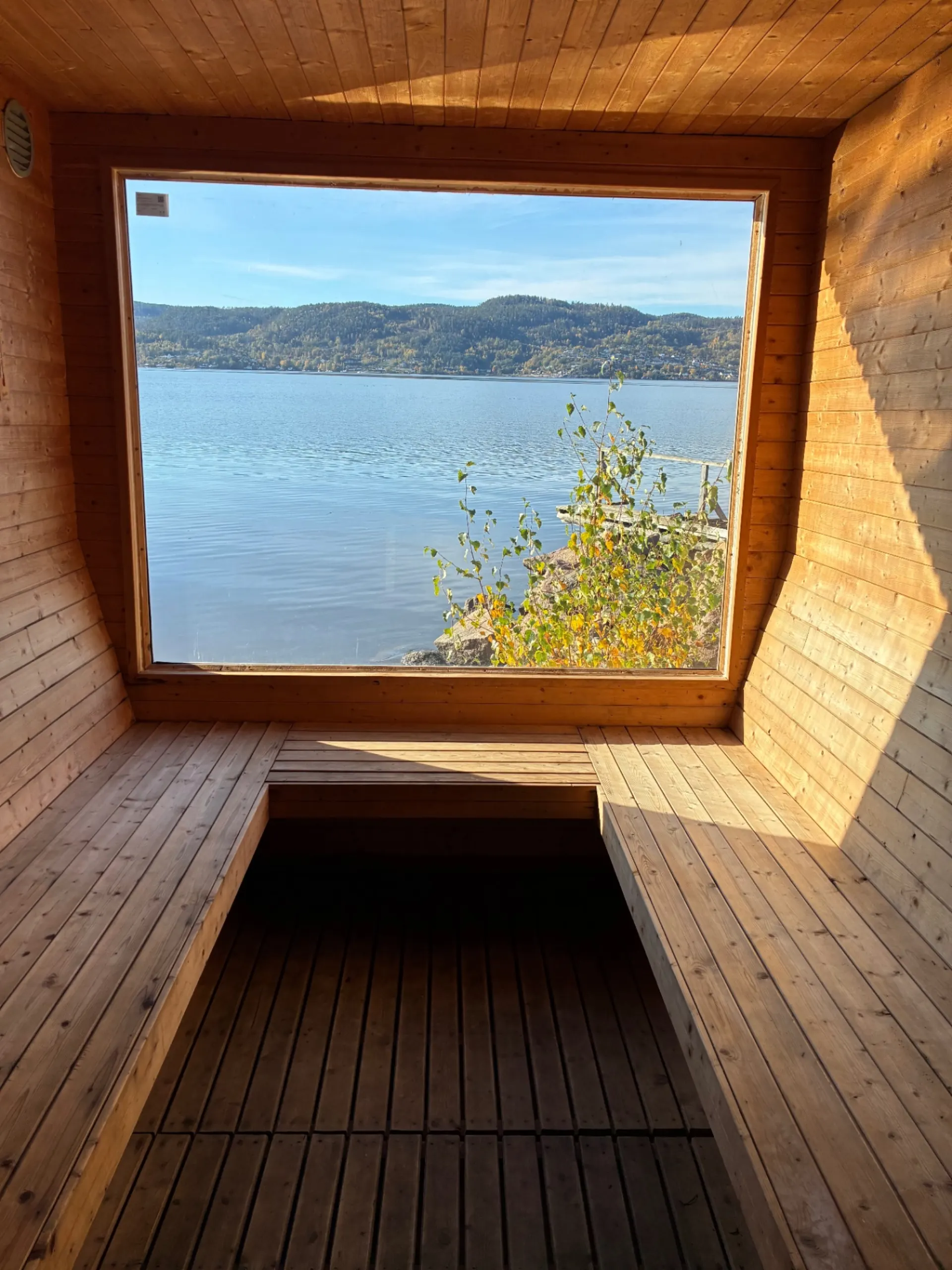
People in the Nordic countries have gone from a hot sauna into cold water for hundreds of years. In recent years there has been a lot of research, and even more claims. We have read the studies. Here is what researchers know, what they do not know, and what it means for a visit to the sauna in Tofte.
Sauna and the heart: the Finnish study
The best known study followed 2,315 Finnish men aged 42 to 60 for about 20 years. Those who used a sauna 4 to 7 times a week had a 40 per cent lower risk of dying during the study than those who went once a week, and half the risk of dying from cardiovascular disease. Those who went 2 to 3 times a week were in between, with a 24 per cent lower risk.
It matters how you read this. The study shows a link, not a cause. The participants were all men from eastern Finland, and they reported their sauna habits once, when the study began. People who use a sauna often may also be healthier and less stressed to begin with. Nobody has run a trial where people are drawn by lot to use a sauna for twenty years.
What happens in the body in cold water
When you walk into cold water, the body responds with what researchers call cold shock: you gasp, you breathe fast, and your pulse and blood pressure rise. The response is strongest in the first 30 seconds, and most powerful in water between 10 and 15 degrees. That is why the most important advice is to go in slowly.
A review from UiT The Arctic University of Norway in Tromsø (104 studies, 2022) found signs that regular cold bathing can affect fat tissue and insulin sensitivity. The researchers themselves write that many of the claimed health benefits may not be caused by the bathing. The studies are small, and people who bathe in winter are often fit and active already.
A meta-analysis from 2025 (11 trials, 3,177 healthy adults) found that markers of inflammation in the blood go up right after a cold bath, that people report less stress twelve hours later, and that the immune system did not change in a way that could be measured.
Hot and cold together
There is surprisingly little research on the combination itself. A Danish study from 2021 compared eight young men who bathed in winter and used a sauna with eight who did not. The winter bathers used more energy when they were cooled down, and their bodies regulated temperature differently. The figures '11 minutes cold and 57 minutes of sauna a week' come from this study. They describe what these men did. They are not a dose that anyone has tested.
Older Finnish studies show that going back and forth between sauna and ice water puts more strain on the heart than either of them alone. For healthy people that is part of the experience. If you have heart disease, it is a reason to talk to your doctor first.
Mood, sleep and the mind
Most people who bathe in cold water say the same thing: they feel awake and in a good mood afterwards. In a study from 2023, 33 beginners lay in water at 20 degrees for five minutes, and they reported clearly better mood afterwards. The study had no control group, and 20 degrees is a long way from ice bathing.
Whether cold water can help against depression, we do not know yet. There is one case report and a small pilot trial with 87 participants, and a larger trial is under way. Sauna is a little better studied when it comes to sleep: in a survey of 482 sauna users, 83.5 per cent said they slept better, but they were sauna enthusiasts to begin with.
What does not quite hold up
- 'Ice bathing strengthens the immune system.' The largest meta-analysis found no measurable change. One large Dutch trial (3,018 adults) found that people who ended their shower cold had 29 per cent less sickness absence, but they were not ill on fewer days.
- 'Winter bathing burns fat.' The winter bathers in the Danish study were leaner to begin with.
- 'Sauna prevents dementia and heart disease.' The link has been found in one group of Finnish men. It is promising, but it is not proven.
How to bathe safely
- Never bathe alone, and choose a place where it is easy to get out again.
- Go in slowly. Do not jump or dive. Get your breathing under control before you swim.
- Keep it short. The researchers behind the British advice say less than ten minutes in cold water. Shorter is fine.
- Put on warm clothes straight away. The body keeps cooling for about half an hour afterwards, so wait a while before you drive.
- No alcohol. In Finland, alcohol was involved in half of the deaths in saunas.
- Talk to your doctor first if you have heart disease, untreated high blood pressure, heart rhythm problems, epilepsy, or faint easily.
Cardiologist Maja-Lisa Løchen at UiT puts it simply: start gently, and do not bathe alone.
What does this mean for you?
Research does not promise a longer life from sauna and fjord bathing. What it supports is more modest, and perhaps more important: people who do this regularly feel good about it, they feel calmer and more awake, and for healthy people it is safe when it is done with common sense. The rest is quiet, heat, cold water and a view, and that needs no study.
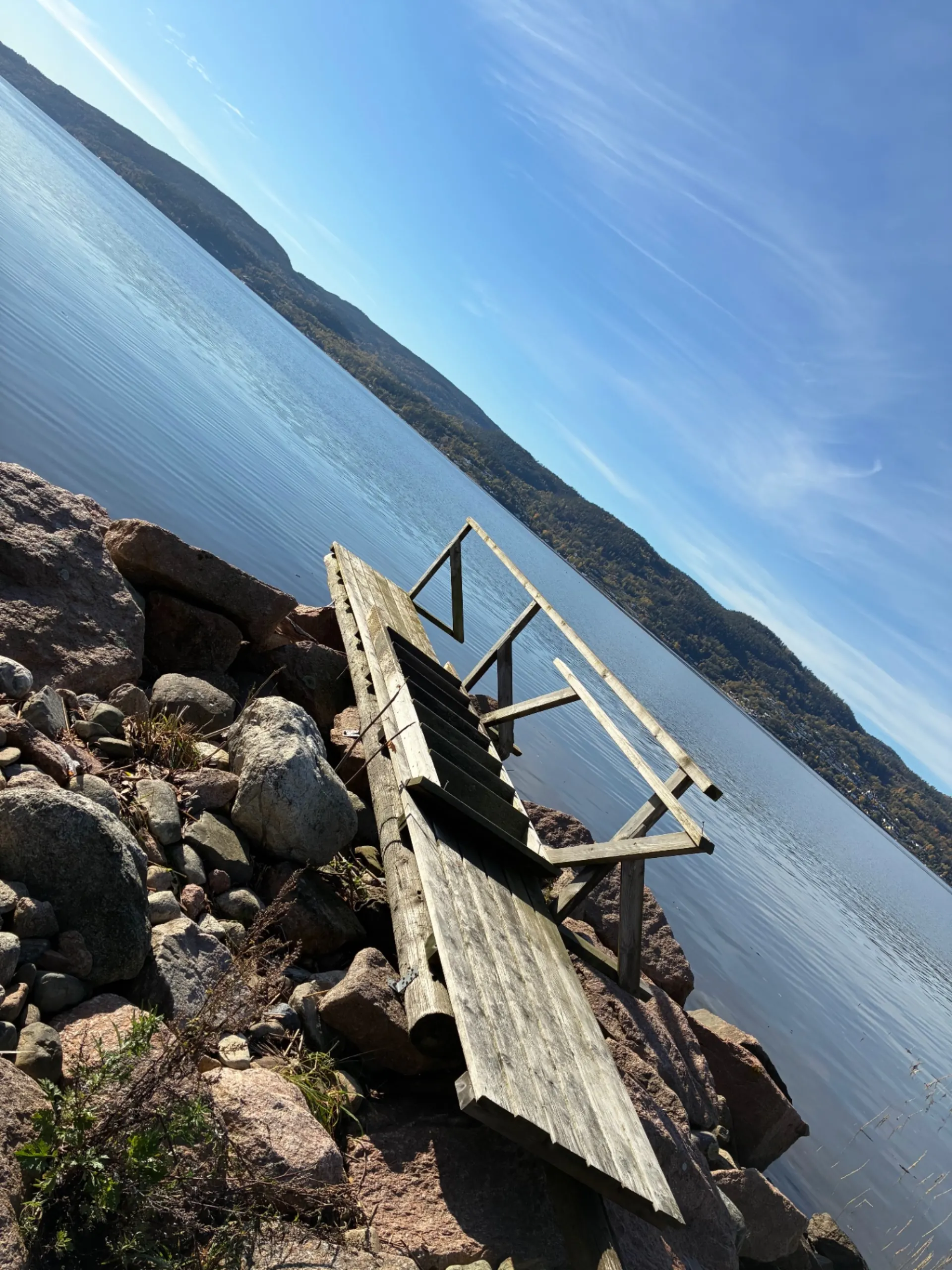
At Sakra it is a few steps from the bench to the fjord. The fjord at Skjæra is usually free of ice all winter, so you can bathe straight from the sauna. This is not medical advice. If you are unsure about your health, ask your doctor.
Sources
- Laukkanen et al. 2015, JAMA Internal Medicine, sauna habits and mortality in 2,315 Finnish men
- Espeland, de Weerd and Mercer 2022, International Journal of Circumpolar Health, review of 104 studies on cold water and health
- Cain et al. 2025, PLOS ONE, meta-analysis of 11 trials of cold-water immersion
- Søberg et al. 2021, Cell Reports Medicine, winter swimmers who combine cold dips and sauna
- Yankouskaya et al. 2023, Biology, mood after five minutes in cold water
- Buijze et al. 2016, PLOS ONE, cold showers and sickness absence
- Tipton et al. 2022, British Journal of Sports Medicine, how to reduce the risks of cold water
- Science Norway 2021, cardiologist Maja-Lisa Løchen on winter swimming
- Redningsselskapet, advice for ice bathers (in Norwegian)